Play off labels

Share This Article

Facebook
Twitter
LinkedIn

Meet An Adjuvant Label

Shawnee Elmore, Regulatory Lead

An adjuvant is a product that is formulated to work with and assist the performance of that expensive herbicide and or pesticide that you’ve just purchased to apply on different crops in various regions under changing field conditions.

While we know that there are a thousand demands on your time and attention, a few minutes spent on understanding the adjuvant label will result in more effective field applications. Read more to find an example of what the front and backside of an adjuvant label looks like, accompanied by thorough explanations of each section. Please contact us in case of any questions, we are here to help.

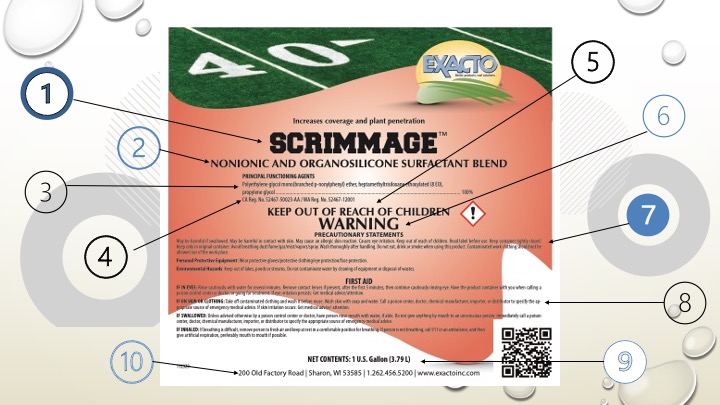
Front Label

Scrimmage Label Decoding
  1. The name of the product, here it is called Scrimmage.
  1. This is the ASTM standard that this adjuvant must meet and tells you that Scrimmage is a blend of a nonionic surfactant [NIS] and an organosilicone surfactant [OSS].
    1. ASTM is an organization that establishes standards, definitions, and testing methods to ensure that a formulation does what the label tells you this product can do.
    2. Both the NIS and the OSS surfactants are known to combine well with many pesticide solutions and improve the application’s coverage.
  1. The “Principal Functioning Agents” section tells you what ingredients are doing the work of the product and what percentage of those ingredients are in this container.
    1. Sometimes, other ingredients are part of the chemical formulation, such as preservatives or thickeners that assist by increasing its shelf life or applying the product. These may be listed as a separate percentage.
    2. This principal functioning agents’ phrase also means that all the ingredients in this container have been tested, and approved by the Federal Code of Regulations [CFR] for use on crops to be consumed by people or animals.
  1. State registration numbers mean that Exacto has registered Scrimmage in California and Washington. Both of these states have stringent regulations about what products can be sold to their residents which increases transparency and compliance with safety and environmental laws.
    1. Most states do require registration, but not all of them have strict rules or require that the numbers be on a product label.
    2. Scrimmage is registered in many other states-you can ask your distributor or retailer, or look up the product name on your state’s Department of Agriculture website.
  1. The “Keep everything out of the reach children” phrase is self-explanatory. Children have a lesser sense of how dangerous the world can be and delight in taking risks. Keep everything high up on the most inaccessible shelf possible and lock down the ladders.
  1. The “WARNING” sign is called a “signal word”. This is a precise, deliberately chosen word, often with an accompanying icon, that tells you what is specifically and potentially harmful about the product. In this case, ‘WARNING’ with an exclamation point icon has a very definite meaning that is explained in the text below the warning sign. A signal word (danger or warning) is a precautionary statement consistent with product toxicity data. Read a more detailed explanation on the SDS about the safety precautions of the product.
  1. The Precautionary Statements advise you not to misuse the product, misusing the product could lead to consequences. They also protect the manufacturer and user against further complications, health, and otherwise.
    1. We, the manufacturers of this product, tell you not to swallow it; that it might give you an unpleasant rash, and will hurt a lot if you get it in your eyes.
    2. You have already been told to keep it out of the reach of children, but we repeat it because that is important.
    3. You are instructed to read the label before using the product because we know that you’re in a hurry and might skip a step necessary to the successful use of it.
    4. We tell you to prevent spills by keeping the lid on tight and not to decant into another, probably unmarked, container. That does happen and people get hurt.
    5. We tell you to wash up before having lunch and to not reuse your work clothes until after laundering.
    6. We tell you to wear your protective equipment [PPE] to prevent unnecessary exposure and finally, to clean everything up carefully because everybody is downstream and upstream from everyone else.
  1. These first aid instructions tell you what to do if you haven’t followed the previous section’s advice. Since accidents can cause panic, you are advised to get professional help as soon as possible.
  1. Here’s how much product you have in this container which may be a handy thing to know when you are mixing with a pesticide. Some states also require that the weight or density be listed here.
  1. This is where you’ll find our contact information in case you have any questions.

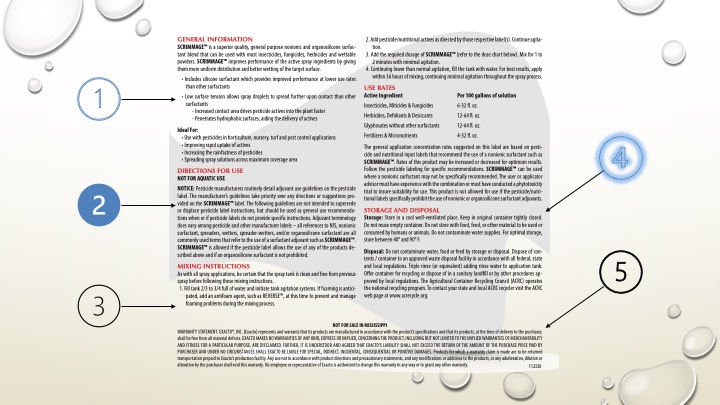
Back Label

Scrimmage Label Decoding
  1. The “General Information” section tells you what we know about how this product will benefit your pesticide application. There are probably more good things that we could tell you, but label space is restricted with all the legal language required. Ask your distributor or retailer if there are marketing materials available with more details. 
  1. Under “Directions For Use”, we will remind you not to use this product in or around water-meaning rivers, ponds, streams and list other ways to use or not use a surfactant adjuvant specifically. However, there are adjuvants approved for aquatic use, and their labels will clearly state that.
  1. The “Mixing Instructions” and “Use Rates” are very important to the successful use of this surfactant adjuvant in your pesticide application. We have tested all this information and tried to anticipate everything that you might need to know in advance. If there is a question that we have missed, please ask your distributor or retailer to call us at the number on the bottom of the label.
  1. The “Storage And Disposal” section will advise you on how to store the product, remind you to keep the lid on, be mindful of what you are storing next to on the shelf, and prevent freezing or high temperatures.
    1. Storage conditions by season are different in Minnesota vs Central Texas, so we give you a storage range to follow.
    2. Disposal of the container is regulated by all your local laws, so we tell you to follow those that pertain to your location. We also recommend that you recycle the container wherever permitted.
  1. The “Warranty Statement” summarizes our rights, and your rights should the law be involved. 

Interested to learn more?

Complete the form below and we will be in touch!

Discover Innovative Moisture Management Solutions for Turf

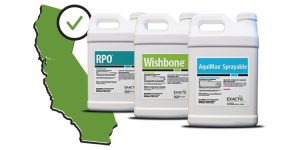
Revolutionize how you care for turf with effective solutions including wetting agents RPO™, Wishbone™, and the innovative AquiMax® Sprayable water management product. We’re excited to introduce these breakthroughs in turf management with approval for use in multiple states, including California.
Adjuvants for Enlist One® and Enlist Duo®

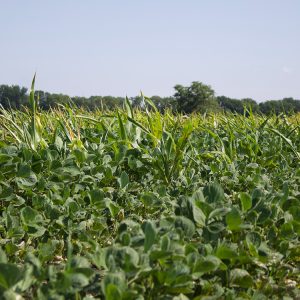
With tightening EPA regulations and increased label restrictions on dicamba, Corteva’s Enlist One® and Enlist Duo® are seeing increased adoption. As more growers make the change, choosing the right adjuvants to use with Enlist One and Enlist Duo is key to ensuring optimum weed control.

turf research highlight field day athletic field mulched leaves

Research Highlight: Athletic Fields & Leaf Mulching

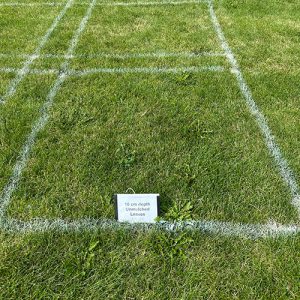
Explore UW-Madison’s turf research studies from the Wisconsin Turfgrass Association Field Day. Dr. Soldat’s Soil Science Program showcased an athletic field management study comparing conventional & organic approaches. Dr. Koch’s Plant Pathology Program highlighted a leaf mulching study.

Mid-Season US Crop Update

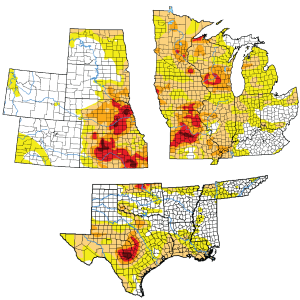
With a dry spring hanging over the corn belt, concerns of returned crop stress remain going into the second half of the season. Regional drought monitor maps give reason for this concern as drought lingers in across much of the central US.

turf plot impacted by localized dry spot, hydrophobic areas

Improving Soil Moisture with Turf Wetting Agents

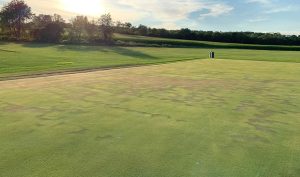
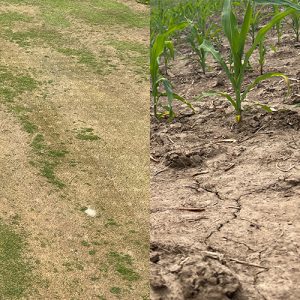
Turf needs water to survive. If not managed effectively, soil moisture can cause consistent problems such as water-repellancy that create dry patches, inconsistent turf appearance, and in severe cases, complete loss of turf. Turf wetting agents help move water into the soil, improve uniformity, and increase moisture retention.

Strengthening Soil Water Management With Agricultural Wetting Agents

Soil water management plays a big role in both agriculture and turf industries, but turf holds secrets to advancements in moisture management technology that haven’t reached agriculture yet. Agricultural wetting agents are here and ready to help farmers manage water and keep moisture in the soil.

Follow Exacto, Inc.

Featured Product

Solutions Offered

Research, Development, and Innovation

Exacto has strong research and product development capabilities build on 40 years of experience. We offer customized product development services to meet your specific pesticide, fertilizer, biostimulant, biopesticide, adjuvant, or seed treatment needs.

Private Label Service

Our full-service specialty chemical development and commercialization program provides access to the latest technologies and the technical and marketing support needed to establish a successful custom branded product program, including in-house label design and printing capabilities.

Regulatory

Monitoring the regulations that affect your day to day operations, Exacto’s regulatory compliance staff provides a wealth of information for both our associates and partners for expert advice to navigate the complicated world of local, state, federal, and international rules and regulations.