
Trademarking your brands is important

Share This Article

Facebook
Twitter
LinkedIn

Trademarking your brand

Bob Herzfeld, Product Manager

Protecting Your Brand and Facts About Trademarking

As a private label manufacturer, Exacto develops, formulates, and markets high-quality and unique adjuvants for agricultural, turf and ornamental, and professional vegetation management distribution. Exacto differentiates itself by offering additional services to our customers to create their brand and differentiate themselves in markets. Through hard work and financial investment, many of our customers have developed their brand lines to communicate their quality and expertise. Unfortunately, while helping customers build and expand their private label product line, customers sometimes have encountered trademark issues. These issues can turn out to be very expensive and disruptive to your business.
Trademarking helps protect this investment and the image of your branded products and company name. Read more about the “ins and outs” of trademarking and why it is important.

What is a Trademark?

From the United States Patent and Trademark Office (USPTO):

A trademark can be any word, phrase, symbol, design, or a combination of these things that identifies your goods or services. It’s how customers recognize you in the marketplace and distinguish you from your competitors.

  • Identifies the source of your goods or services.
  • Provides legal protection for your brand.
  • Helps you guard against counterfeiting and fraud.

A common misconception is that having a trademark means you legally own a particular word or phrase and prevent others from using it. However, you don’t have rights to the word or phrase in general, only to how that word or phrase is used with your specific goods or services.
In other words, trademarks are valid for specific business areas, such as agricultural, transportation, health care, etc. You can establish a trademark to be protected for agriculture, but other industries can use the same brand name.

What is the difference between a Trademark -™- and a Registered Trademark -®-?

A brand is a something that helps your users identify and separate your product from competitive products. By adding a ™ to your brand (name/phrase/logo) you are trademarking your brand. And you become a trademark owner as soon as you start using your trademark with your goods or services. You establish rights in your trademark by using it, but those rights are limited, and they only apply to the geographic area in which you’re providing your goods or services. If you want stronger, nationwide rights, you’ll need to apply to register your trademark with the USPTO. 

You’re not required to register your trademark. However, a registered trademark provides broader rights and protections than an unregistered one.

Once you have decided on a name for your brand, you should start using TM with your brand name (ex: Brand Name™). Document the date you start using TM so you have evidence that when you took that step if someone later challenges you.

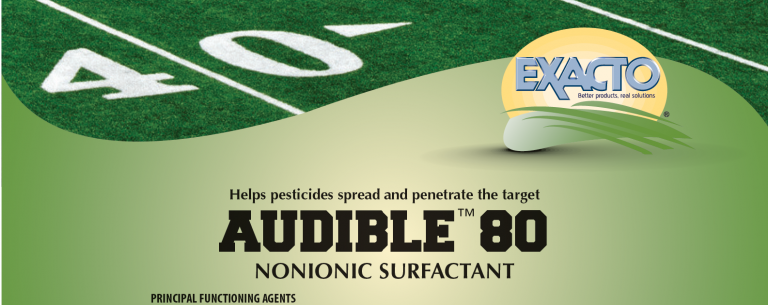
Example of a ™ branded product

This means, if you’re a regional agricultural distributor, your trademark (TM) for a brand name only provides some protection in your trade area and within the agricultural field. So, you may see your brand or product name in other markets. 

Also, some states offer trademarking within that state only. So a next step for a trademarked name could be registering with states that offer it. It provides more protection than just using the TM alone.

If your business is expanding to other trade areas or nationally, it is best that you register your trademark with the USPTO. Once you have received your brand registration, use ® (ex: Brand Name®). If you are not using a ™ or ® when promoting your brand name, it may become more difficult to protect it.   

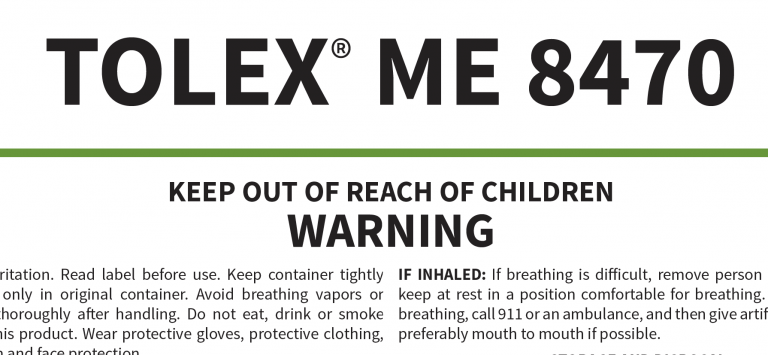
Example of a ® branded product

How to Begin the Trademarking Process

Once you have decided on a particular brand name, it is strongly recommended that you do a “Trademark Search .” You can do your own simple search by going to the USPTO website. This will give you an overall view of whether there is the same name in the market or something very similar. If you find a similar brand name, a deep search will be necessary and should be done by a patent attorney. It is best to find a unique term, which will give you a better chance to be accepted. The “Trademark Search” will only show officially registered brand names with ® and not those with a ™. With its long experience in the industry, Exacto knows many ™ brand names used. Therefore, we can help our customers look beyond the publicly trademarked names and prevent infringements. A trademark lawyer can confirm that the chosen brand name is available.

When you are assured you have a trademarkable name, you can go to the USPTO website and use the “Trademark Application System” (TEAS). It will lead you to the forms and information you need to complete the application. 

After your application is submitted, USPTO will examine your applications for any issues or missed information. Once your application is accepted, a public notice goes out for public comment. Comments or objections to your brand name will be examined, and you will be notified if there are any issues. If all is well, your brand name will be registered. There are fees for applying as well as maintenance fees every five to ten years to maintain your trademark. 

Make sure you pay your maintenance fees. If not, your trademark will lapse and be abandoned, losing any protection. 

Trademark Infringement & Penalties

If you suspect that someone is using your trademark or something similar, you again can go the TEAS website to search for others that may be using your brand name.

Here is what the USPTO defines as trademark infringement. 

What is trademark infringement?

Trademark infringement is the unauthorized use of a trademark or service mark on or in connection with goods and/or services in a manner that is likely to cause confusion, deception, or mistake about the source of the goods and/or services.

What happens when you find a company is using your trademark? As an owner of a trademark and you can prove infringement, there are actions that you can take as stated by USPTO.  

What this is saying, the trademark owner can recover gross margins back to the beginning of the violation and all costs of litigation. The party infringing will stop using their brand name and destroy all marketing materials, labels, and data used in selling the product. Also, litigation can tie up the organization’s top management for an extended period. That can be a costly situation.

If your organization is the one infringing?

There are ways to avoid litigation and penalties. First, agree to remove the violating brand from the market and destroy all materials associated before litigation begins. The longer the violator continues that brand in the market, the worse it will be. Second, you can settle with the plaintiff with monetary compensation before going to court. If your brand has been in the market for an extended period and is essential to your organization, consider the second.
No matter what happens, it will carry a cost to you. Again, retaining a lawyer with trademark experience is always a good step.

Other challenges that can arise

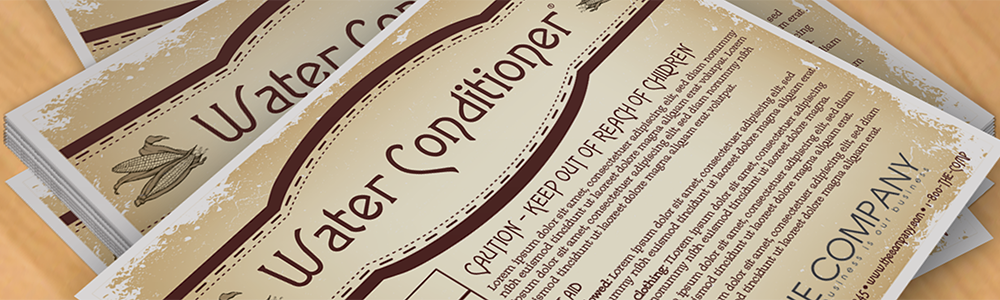
When you use a brand name for an adjuvant that has a similar brand name used for another type of adjuvant in the same market, for example, an MSO crop oil and a water conditioner in agriculture both called ‘Super Power™’, the products potentially could be confused with each other leading to product performance issues or injury and potential litigation.

To Summarize

  • Companies that want to trademark a product brand name or service can do their own preliminary search using the USPTO web search function. Use a patent and trademark attorney to do deep research. 
  • Exacto has a long experience helping customers find possible brand names and advise on brand names they can use.
  • Once your trademark is chosen, begin using the ™ with your brand name. For even greater protection, apply for a registered trademark. When registration is granted, immediately start using the ® in conjunction with your brand name. If your ™ or ® are not used, you may lose your protection.  
  • When you become aware that your trademark is being infringed upon, you must contact the violator to make them aware. Inform them to cease any further sales and remove literature. If the violator does not comply, begin litigation using a trademark attorney.  
  • If your company is found to be violating a trademark, you can comply with the demands. If you want to defend your position, contest the plaintiff’s claims and go to litigation. Defendants who lose their case will have to pay all profits generated from the brand name, remove that brand name and literature from the market, plus pay all legal costs.

To be successful with trademarking a brand name, either  or ®, make sure you do your homework and due diligence upfront. This will protect you from sales and financial loss and keep your brand in the market. 

For more information go to the United States Patent and Trademark Office website (USPTO). 

Meen An Adjuvant Label

Meet An Adjuvant Label

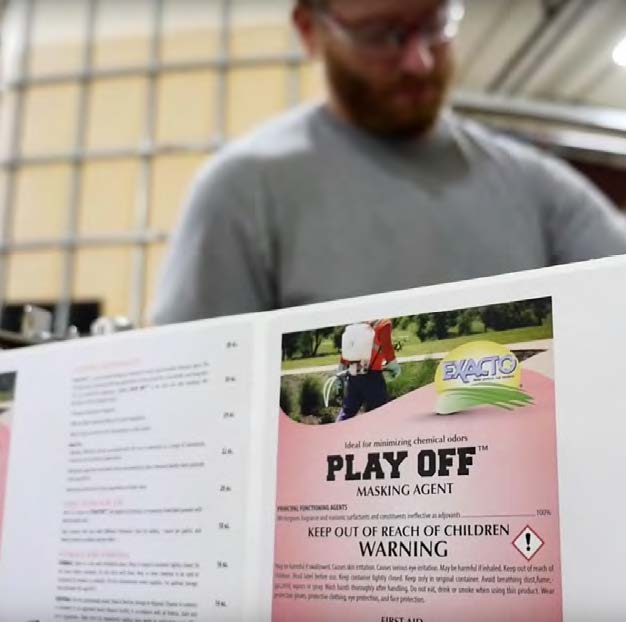
While we know that there are a thousand demands on your time and attention, a few minutes spent on understanding the adjuvant label will result in more effective applications. Read more to find an example of what the front and backside of an adjuvant label looks like, accompanied by thorough explanations of each section.

Read More »

Mid-Season US Crop Update

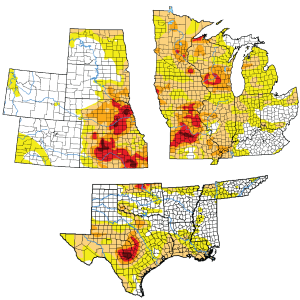
With a dry spring hanging over the corn belt, concerns of returned crop stress remain going into the second half of the season. Regional drought monitor maps give reason for this concern as drought lingers in across much of the central US.

turf plot impacted by localized dry spot, hydrophobic areas

Improving Soil Moisture with Turf Wetting Agents

Turf needs water to survive. If not managed effectively, soil moisture can cause consistent problems such as water-repellancy that create dry patches, inconsistent turf appearance, and in severe cases, complete loss of turf. Turf wetting agents help move water into the soil, improve uniformity, and increase moisture retention.

Strengthening Soil Water Management With Agricultural Wetting Agents

Soil water management plays a big role in both agriculture and turf industries, but turf holds secrets to advancements in moisture management technology that haven’t reached agriculture yet. Agricultural wetting agents are here and ready to help farmers manage water and keep moisture in the soil.

Adjuvants Improve Fungicide Applications in Turf

As the heat of summer nears, so does the threat of fungal diseases infecting turf. Planning a fungicide application with adjuvants based on environmental conditions and the turf ecosystem can improve fungicide effectiveness.

fungicide application soybeans corn fungal pathogen disease

How Fungicides & Adjuvants Work Together to Reduce Disease Pressure

Fungicides are an important part of plant health, protecting crops from disease. Corn tar spot, southern corn rust, and frogeye leaf spot are a few diseases that can be costly if not treated with an effective fungicide application. Planning an application with adjuvants specifically targeting these diseases is imperative to reducing disease pressure.

turf field trials

Turf Field Testing – Where Great Ideas Become Great Products

How do great ideas turn into high-quality products? The idea is translated into a stable, quality formulation then the questions begin. At what rate should the product be applied? When should it be reapplied? Can it be mixed with other materials? Does it need to be watered-in? We answer these questions by conducting field trials to put new product ideas to the test under real-world conditions.

weed needed high quality surfactant corn field

Is This Surfactant Too Good to be True? Here’s How You Can Test It

Adjuvant decisions may not seem like a big deal, but they can make a real difference in active performance, agronomic effects, and overall cost of an application. It’s important to ask questions to understand product composition and potential agronomic effects to determine if an adjuvant will truly be cost effective.

Follow Exacto, Inc.

Featured Product

Want to receive our next blog in your mailbox?

Solutions Offered

Research, Development, and Innovation

Exacto has strong research and product development capabilities build on 40 years of experience. We offer customized product development services to meet your specific pesticide, fertilizer, biostimulant, biopesticide, adjuvant, or seed treatment needs.

Private Label Service

Our full-service specialty chemical development and commercialization program provides access to the latest technologies and the technical and marketing support needed to establish a successful custom branded product program, including in-house label design and printing capabilities.

Regulatory

Monitoring the regulations that affect your day to day operations, Exacto’s regulatory compliance staff provides a wealth of information for both our associates and partners for expert advice to navigate the complicated world of local, state, federal, and international rules and regulations.