

august 22 2022 us crop update

Share This Article

Facebook
Twitter
LinkedIn

US Crop Update – August 22, 2022

Summary

Steve Doench, Head of Sustainable Agronomy
Steve Doench, Technical Sales Agronomist
  1. 2022 US Crop Yield Estimates are declining as crop conditions degrade and enough dry areas exist to cap yield expectations. Rainfall and cooler weather did recently help in many areas. The sum of late planting and periods of heat and dryness this summer has prevented yield potential from reaching record levels and final yield will hinge on how well grain fill finishes.

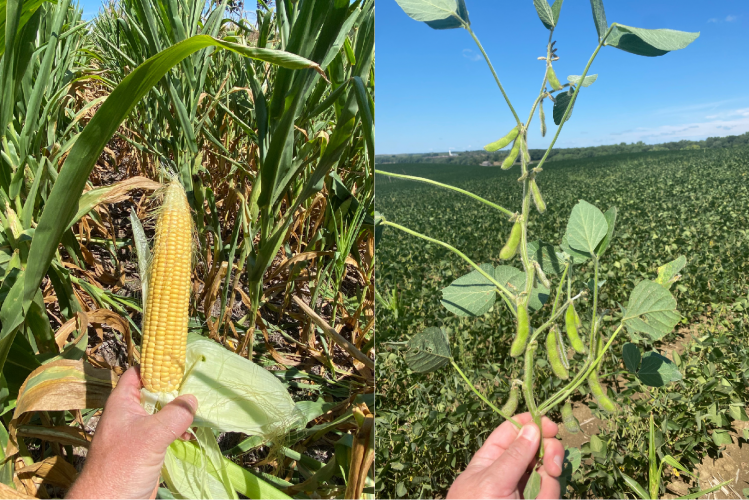
  2. Widespread rainfall this past week helped western Iowa the most. Cooler weather also is beneficial to grain fill and reducing water stress. A quick trip to parts of eastern Nebraska and western Iowa shows many crops under drought stress. Corn appeared to retain decent kernel numbers, but likely will have smaller kernel size/weights and lower yield potential. Soybeans are setting fewer pods than normal and have a higher risk of lower-than-expected yields in drier areas than corn which was largely able to pollinate well.

  3. The forecast continues to show a warmer and drier finish to the crop season in the central and northern corn-belt. Short-term cooler conditions in the eastern corn-belt are helpful, but the lack of widespread rainfall continues to hurt grain fill in the western corn-belt.

Corn and Soybean Crop Condition

Crop condition ratings continue to drop as many areas are very dry and in need of rain to finish well this crop season. Cooler temperatures are slowing ratings from slipping further.

Data from Unites States Department of Agriculture.  https://www.nass.usda.gov/

Weather impacts

Precipitation

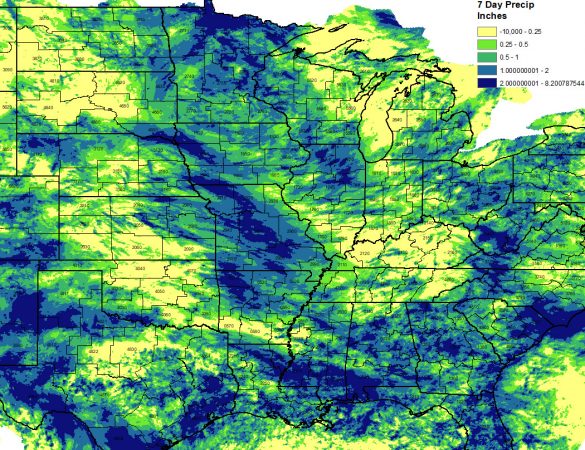
august 2022 weekly precipitation map

Weekly precipitation

The past weeks’ rainfall coverage helped in western Iowa the most, but in many already drought-stricken areas, it might not have been sufficient to positively influence kernel size/weight and overall yield potential. 

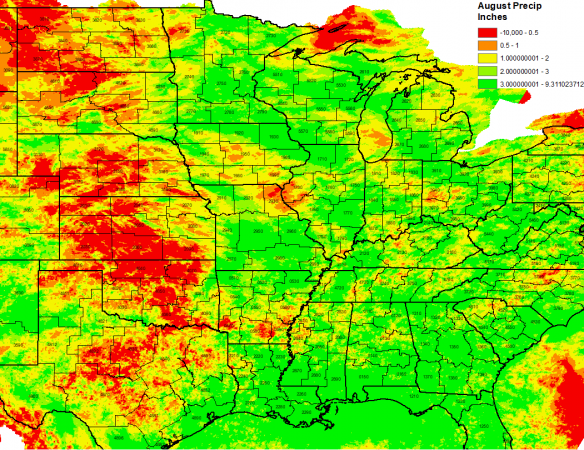
august 2022 precipitation to date

August precipitation to date

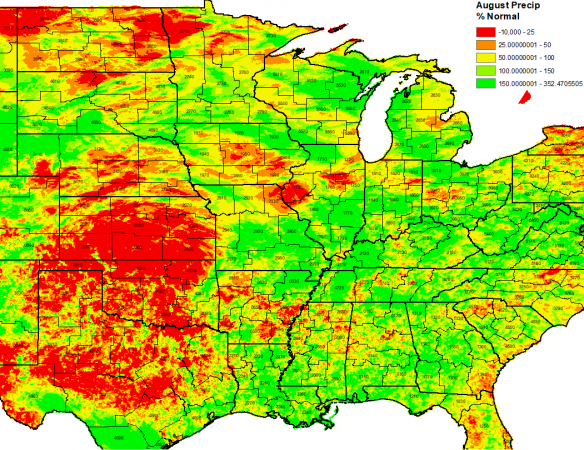
normal august precipitation percent

Normal precipitation % for August

Temperature

August temperatures started out well above normal, but have since cooled off. These cooler temperatures are helping extend grain fill duration and reduce water stress.

Corn and soybean crop progress has almost caught up to normal levels even after a generally warmer than normal summer. 

Drought Monitor

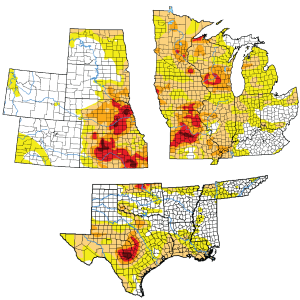
Drought remains firmly in place for the western corn-belt and is starting to be problematic for winter wheat establishment this fall in areas like Kansas. Drought carryover into 2023 is also a concernThis long-term drought in the western corn-belt and southern plains will require a wet fall and winter to reverse prior to next season’s spring planted crops. 

Data from US Drought Monitor

Western Iowa and Eastern Nebraska Conditions

With many fields under stress, a below-normal yield potential is expected. The outcome from the stress will likely be small kernels in corn while soybeans will struggle to set and fill pods. 

western iowa corn and soybean progress

Corn and soybean progress in western Iowa

September outlook

For long-term forecasts, GFS and ECMWF agree on continued warmer and drier conditions to the north and beneficial wetter and cooler conditions in the south, especially in Texas. 

GFS long-term forecasts

ECMWF long-term forecasts

In short-term weather outlooks, GFS and ECMWF differ. The GFS predicts much drier conditions with an east/west split in warmer west and cooler east. ECMWF forecasts show more scattered rains and a north/south split with warmer conditions in the north and cooler than normal in the south.  

Neither forecast confidently shows a sign of widespread precipitation that is needed to maintain yield expectations going into September. 

GFS short-term forecasts

ECMWF short-term forecasts

Corn tar spot and fungicide applications

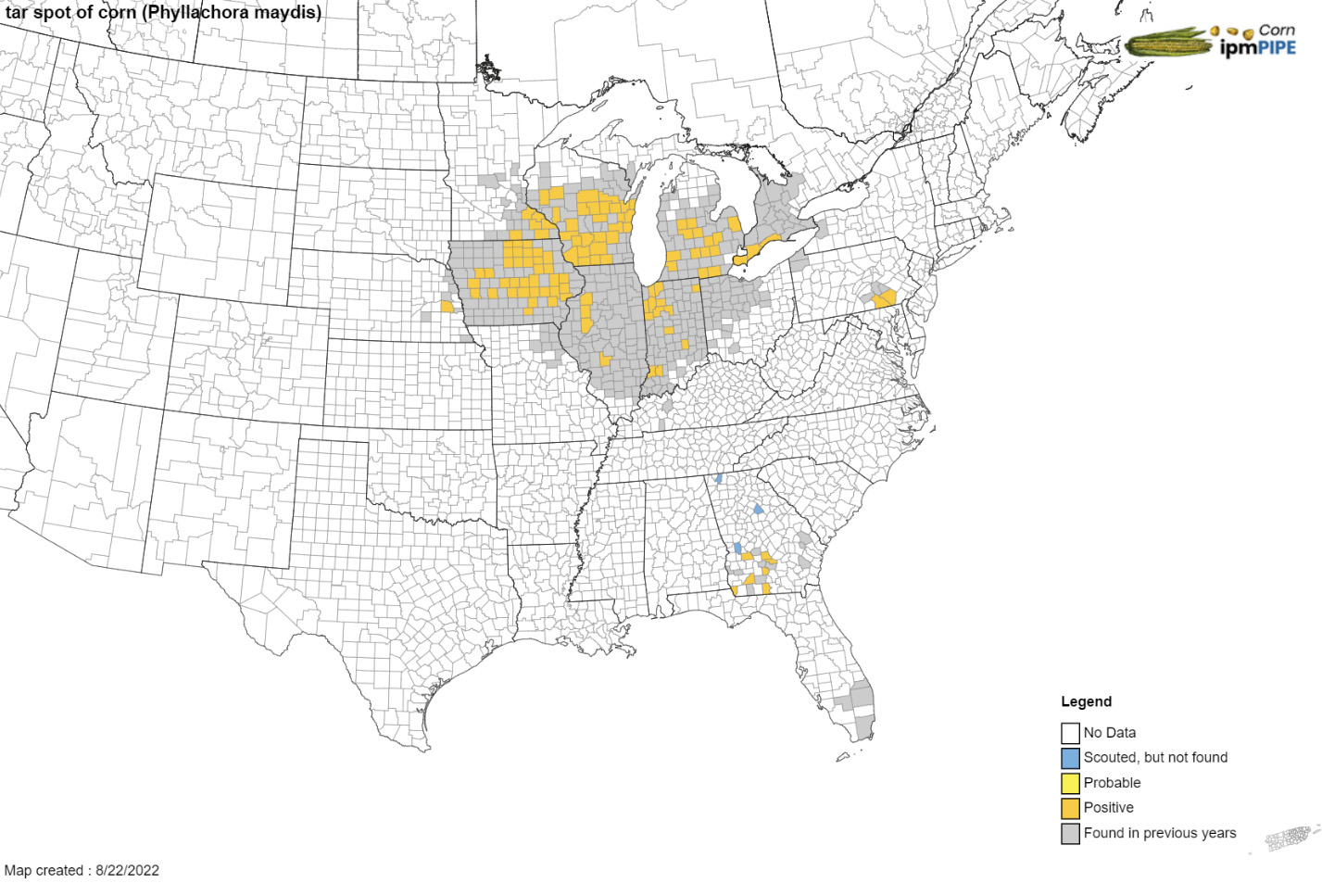
Lots of fungicide applications have been completed for the much-anticipated corn tar spot. So far it is not as widespread as 2021 and is running out of time to have any major implications on yield and stalk quality. In Wisconsin, repetitive storms over the past month have helped corn tar spot spread. In eastern Nebraska, confirmed corn tar spot sightings are something to watch going forward as irrigated corn fields create an ideal environment for disease development. 

corn tar spot sightings 2022

2022 corn tar spot sightings

Conclusions

As a result of early-mid season drought, corn is showing smaller kernel sizes and soybeans show similar stress with below-average pod sizes. Both are signs of a lower yield potential than normal. Long-term forecasts predict warm, dry conditions in the north and wet, cool conditions in the south. The limited rainfall in short-term forecasts leaves concern for reaching yield expectations going into September. Corn tar spot seems to be more controlled this year, but will be something to watch in irrigated areas as the environment becomes more ideal for disease development. 

Surface Tension: Secrets of an Effective Tank Mix

Formulation understanding begins in the lab, where researchers study how liquids behave under specific conditions. This knowledge aids users in predicting real-world product performance. Exacto Chemist Chris Walter discusses surface tension in the Research to Real-World series, helping applicators grasp the importance of surfactant and wetting agent chemistry.

Salinity, Sodicity, and Turfgrass: Managing Irrigation Water Quality

Salinity and sodicity can challenge turfgrass maintenance in arid regions. This blog post discusses causes, effects, and management strategies for irrigation water quality. Choose turfgrass cultivars, conduct irrigation water and soil testing, and apply leaching and gypsum to improve soil conditions.

Discover Innovative Moisture Management Solutions for Turf

Revolutionize how you care for turf with effective solutions including wetting agents RPO™, Wishbone™, and the innovative AquiMax® Sprayable water management product. We’re excited to introduce these breakthroughs in turf management with approval for use in multiple states, including California.

Adjuvants for Enlist One® and Enlist Duo®

With tightening EPA regulations and increased label restrictions on dicamba, Corteva’s Enlist One® and Enlist Duo® are seeing increased adoption. As more growers make the change, choosing the right adjuvants to use with Enlist One and Enlist Duo is key to ensuring optimum weed control.

turf research highlight field day athletic field mulched leaves

Research Highlight: Athletic Fields & Leaf Mulching

Explore UW-Madison’s turf research studies from the Wisconsin Turfgrass Association Field Day. Dr. Soldat’s Soil Science Program showcased an athletic field management study comparing conventional & organic approaches. Dr. Koch’s Plant Pathology Program highlighted a leaf mulching study.

Mid-Season US Crop Update

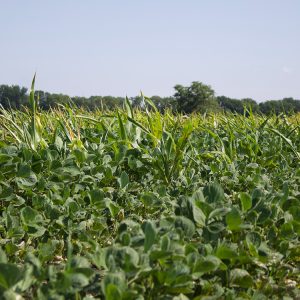
With a dry spring hanging over the corn belt, concerns of returned crop stress remain going into the second half of the season. Regional drought monitor maps give reason for this concern as drought lingers in across much of the central US.

turf plot impacted by localized dry spot, hydrophobic areas

Improving Soil Moisture with Turf Wetting Agents

Turf needs water to survive. If not managed effectively, soil moisture can cause consistent problems such as water-repellancy that create dry patches, inconsistent turf appearance, and in severe cases, complete loss of turf. Turf wetting agents help move water into the soil, improve uniformity, and increase moisture retention.

Strengthening Soil Water Management With Agricultural Wetting Agents

Soil water management plays a big role in both agriculture and turf industries, but turf holds secrets to advancements in moisture management technology that haven’t reached agriculture yet. Agricultural wetting agents are here and ready to help farmers manage water and keep moisture in the soil.

Adjuvants Improve Fungicide Applications in Turf

As the heat of summer nears, so does the threat of fungal diseases infecting turf. Planning a fungicide application with adjuvants based on environmental conditions and the turf ecosystem can improve fungicide effectiveness.

fungicide application soybeans corn fungal pathogen disease

How Fungicides & Adjuvants Work Together to Reduce Disease Pressure

Fungicides are an important part of plant health, protecting crops from disease. Corn tar spot, southern corn rust, and frogeye leaf spot are a few diseases that can be costly if not treated with an effective fungicide application. Planning an application with adjuvants specifically targeting these diseases is imperative to reducing disease pressure.

turf field trials

Turf Field Testing – Where Great Ideas Become Great Products

How do great ideas turn into high-quality products? The idea is translated into a stable, quality formulation then the questions begin. At what rate should the product be applied? When should it be reapplied? Can it be mixed with other materials? Does it need to be watered-in? We answer these questions by conducting field trials to put new product ideas to the test under real-world conditions.

weed needed high quality surfactant corn field

Is This Surfactant Too Good to be True? Here’s How You Can Test It

Adjuvant decisions may not seem like a big deal, but they can make a real difference in active performance, agronomic effects, and overall cost of an application. It’s important to ask questions to understand product composition and potential agronomic effects to determine if an adjuvant will truly be cost effective.

potting soil wetting agents

Why Wetting Agents Are an Asset for Potted Plants

Have you ever purchased a potted plant and noticed that after a few rounds of watering it, the water was going straight down to the drainage holes? This classic case of water repellency or hydrophobicity in the soil can be resolved with the use of soil surfactants, or wetting agents.

spring 2023 crop update

US Crop Update – Spring Planting Outlook

With ongoing drought in the southern plains and increased snow cover in the the north and west, the US is split between dry and wet conditions this spring. As rain and snow cover relieve California and surrounding states, the extra water is causing concern for dam pressure and flooding.

Follow Exacto, Inc.

Featured Product